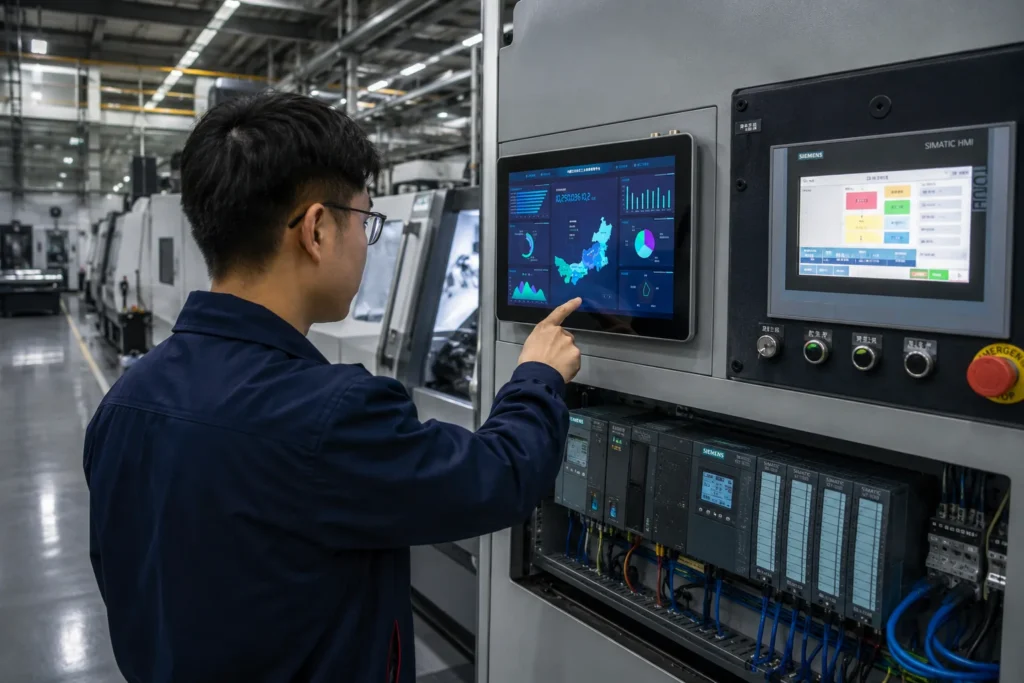
Industrial automation engineers increasingly choose industrial panel PCs over traditional HMIs because modern factories require edge computing, SCADA integration, AI vision inspection, and real-time data analytics. While HMIs still work well for simple PLC visualization, industrial panel PCs provide greater flexibility, computing power, and long-term scalability for Industry 4.0 environments.
Key Takeaways
- Industrial HMIs are ideal for basic machine control and PLC interaction
- Industrial panel PCs support Windows/Linux applications, SCADA, and MES integration
- Smart factories increasingly replace traditional HMIs with panel PCs
- Edge computing and AI workloads require higher-performance industrial computers
- OPC UA, MQTT, and EtherCAT support are major advantages of industrial panel PCs
- Fanless industrial panel PCs offer longer lifecycle support in harsh factory environments
What Is an Industrial HMI?
An industrial HMI (Human Machine Interface) is a touchscreen device used for machine visualization, operator interaction, and PLC communication in factory automation systems. HMIs are commonly installed on CNC machines, packaging systems, production lines, and industrial control cabinets.
According to Wikipedia OPC Unified Architecture, industrial communication standards such as OPC UA enable secure machine-to-machine and machine-to-cloud communication in modern industrial environments. OPC UA has become increasingly important as factories move toward Industry 4.0 and smart manufacturing.
Traditional HMIs are usually designed for:
- PLC monitoring
- Alarm visualization
- Machine status display
- Basic operator input
- Recipe management
- Production counters
In many older factories, HMIs still serve as reliable operator terminals because they are relatively simple and cost-effective. During one packaging line retrofit project we worked on, the customer only required start/stop control, alarm display, and basic production statistics. In that case, a compact HMI was sufficient and reduced deployment costs.
However, traditional HMIs also have several limitations:
| Limitation | Impact on Factory Operations |
|---|---|
| Limited CPU performance | Cannot process AI or edge workloads |
| Closed operating systems | Difficult software expansion |
| Weak multitasking ability | Cannot run SCADA and MES simultaneously |
| Limited storage | Restricted historical data collection |
| Lower scalability | Difficult future upgrades |
As factories adopt MES, predictive maintenance, and AI-driven inspection systems, many engineers discover that traditional HMIs cannot handle modern industrial workloads efficiently.
For factories requiring higher computing capability and flexible deployment, industrial panel PCs are becoming the preferred solution.
Related reading:
Endüstriyel Panel PC Nedir?
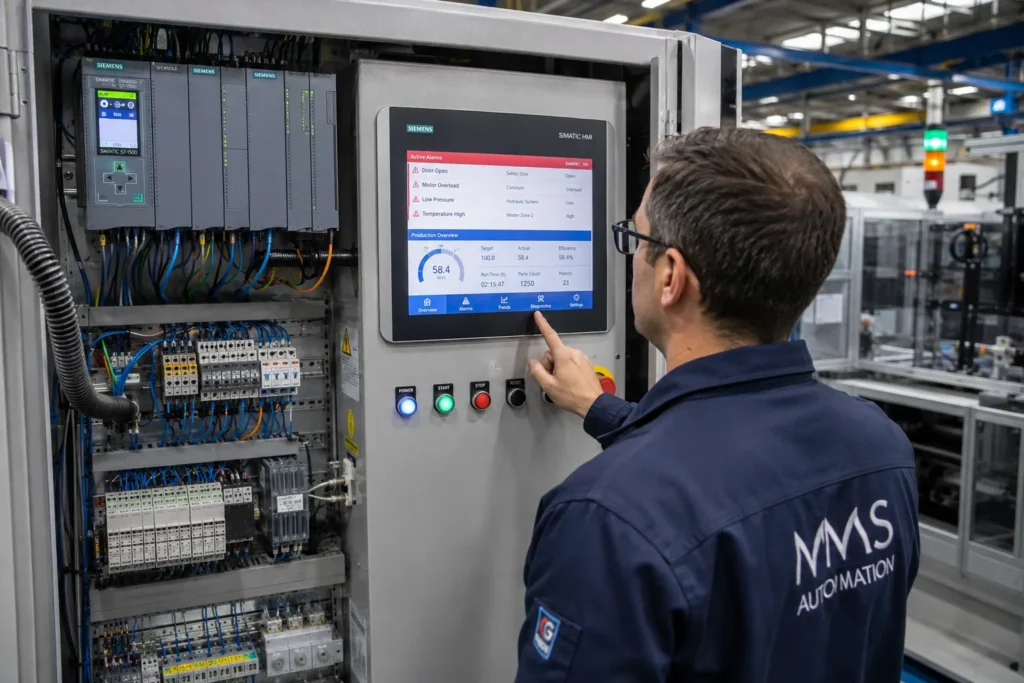
Endüstriyel Panel PC Nedir?
An industrial panel PC combines a rugged industrial computer with an integrated touchscreen display. Unlike traditional HMIs, industrial panel PCs can run full Windows or Linux operating systems and support complex industrial applications.
Modern industrial panel PCs are widely used in:
- MES terminals
- SCADA systems
- Edge AI gateways
- Makine görüş sistemleri
- Smart warehouse monitoring
- Factory automation dashboards
According to IBM Edge Computing Overview, edge computing reduces latency and improves operational efficiency by processing data closer to industrial devices and production equipment.
This is one of the biggest reasons factories are moving from HMIs to industrial panel PCs.
In one CNC automation deployment, we found that the customer needed to simultaneously run:
- SCADA visualization
- PLC communication
- AI defect inspection
- Production data logging
- Remote monitoring software
A traditional HMI could not handle these workloads efficiently. After upgrading to a fanless industrial panel PC, the system became more stable and future software expansion became significantly easier.
Industrial panel PCs typically support:
| Feature | Endüstriyel Panel PC |
|---|---|
| Operating System | Windows / Linux |
| CPU Options | Intel x86 / ARM |
| Communication Protocols | OPC UA, MQTT, Modbus |
| Storage | SSD / NVMe |
| Expansion | Multiple COM/LAN/USB |
| Remote Access | Supported |
| Edge AI | Supported |
You can explore more industrial automation solutions here:
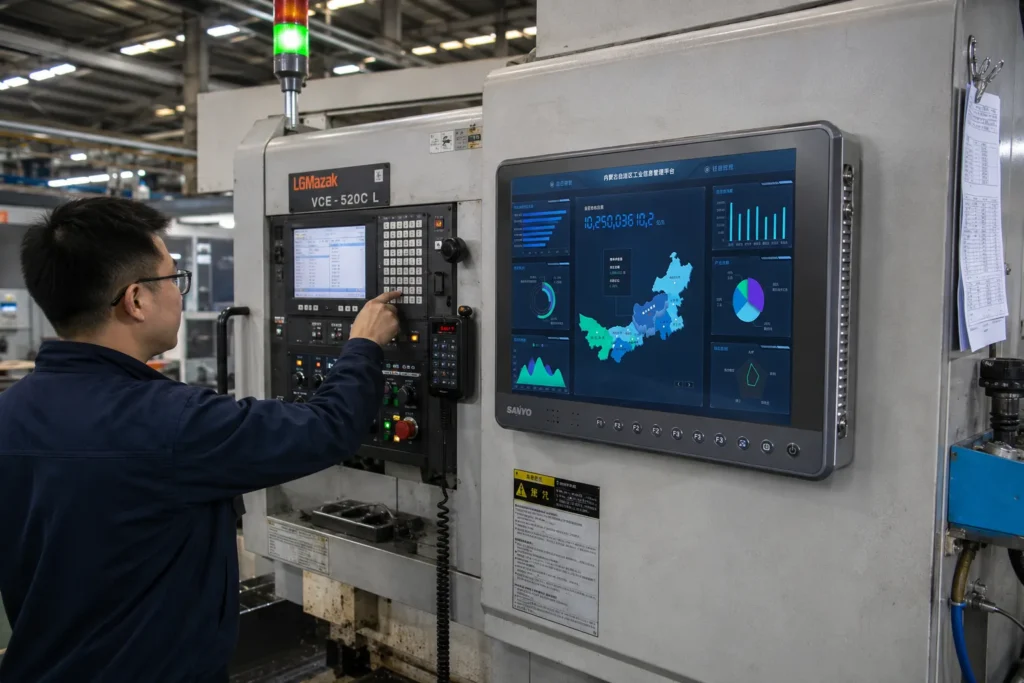
Panel PC vs HMI: Key Differences
Industrial engineers often compare HMI and panel PC solutions based on performance, scalability, software compatibility, and long-term maintenance costs.
The table below summarizes the most important differences.
| Feature | HMI | Endüstriyel Panel PC |
|---|---|---|
| Operating System | Proprietary / RTOS | Windows / Linux |
| Processing Power | Low | High |
| PLC Integration | Strong | Strong |
| SCADA Support | Limited | Full Support |
| MES Compatibility | Limited | Excellent |
| Edge Computing | No | Yes |
| AI Vision Support | No | Supported |
| Data Analytics | Basic | Advanced |
| Remote Access | Limited | Advanced |
| Software Flexibility | Low | High |
| Expandability | Limited | Flexible |
| Lifecycle Scalability | Orta | Long-term |
Traditional HMIs are still effective for standalone machine control systems. However, panel PCs are better suited for modern smart factories that require:
- Remote management
- Cloud connectivity
- Multi-protocol communication
- Real-time analytics
- Industrial cybersecurity
- Edge AI applications
Many modern factories now deploy industrial panel PCs as integrated edge computing terminals instead of standalone HMIs.
Further reading:
Industrial PC Trends 2026
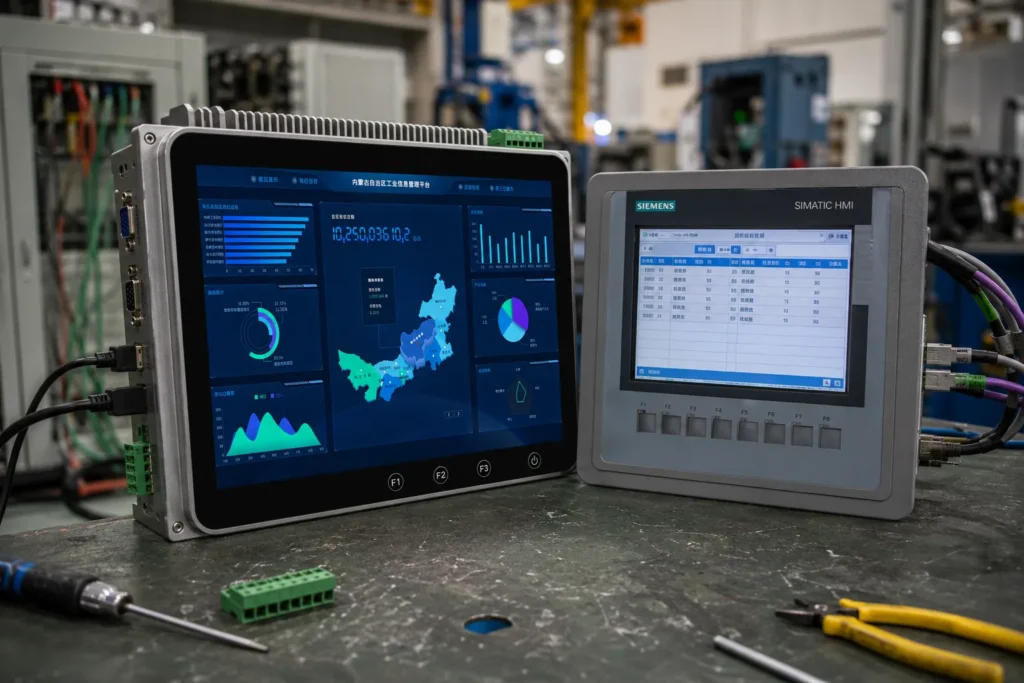
Why Modern Factories Are Replacing HMIs with Panel PCs
Smart manufacturing environments require significantly more computing power than traditional automation systems.
According to IBM Edge Computing Use Cases, edge computing improves manufacturing efficiency, reduces downtime, and supports predictive maintenance through real-time analytics.
In practical factory deployments, we increasingly see these requirements:
- Real-time machine data collection
- MES integration
- AI visual inspection
- Predictive maintenance
- Cloud synchronization
- Remote troubleshooting
Traditional HMIs were never designed for these workloads.
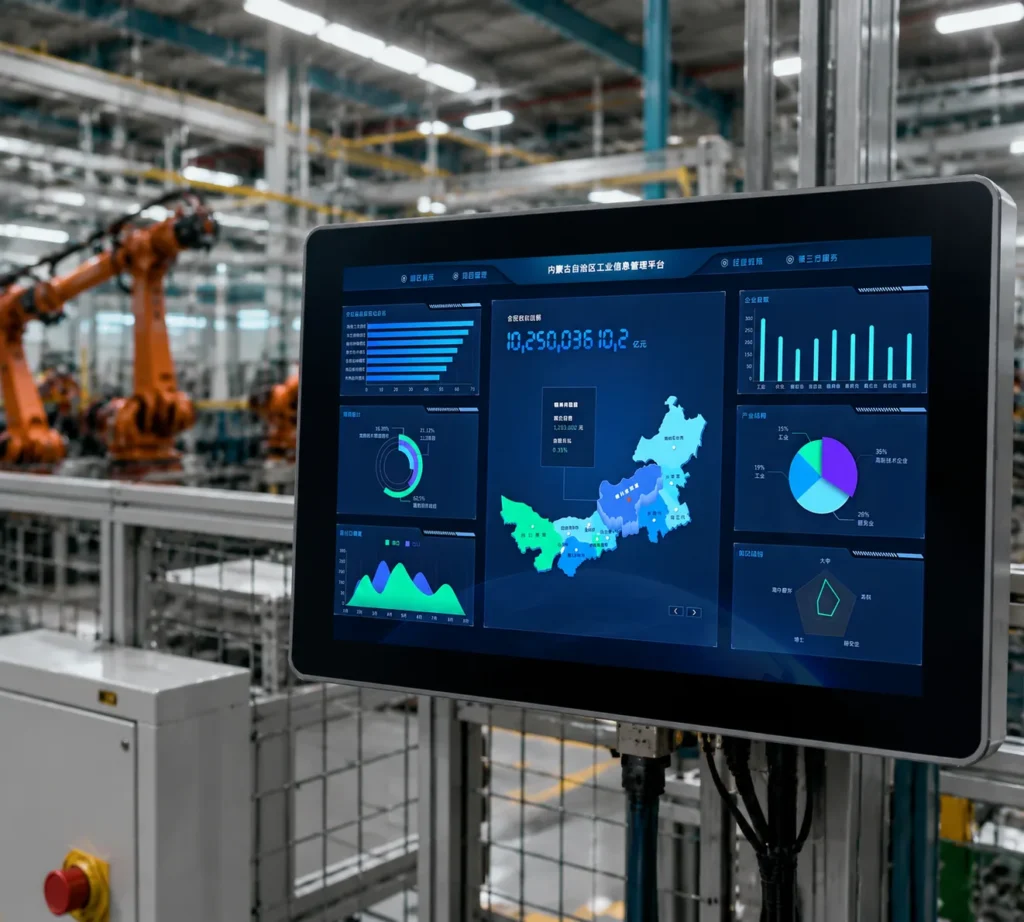
During one food processing project, the factory originally used standard HMIs connected directly to PLC systems. However, after implementing centralized MES monitoring and production analytics, the existing HMIs became performance bottlenecks.
We replaced the HMIs with fanless industrial panel PCs running Windows IoT and SCADA software. The new system enabled:
- Centralized production dashboards
- Real-time alarm management
- Historical data storage
- Remote maintenance access
- Multi-machine synchronization
This upgrade significantly reduced downtime during maintenance windows.
Industrial panel PCs also provide better long-term scalability because software can be upgraded without replacing the entire operator terminal infrastructure.
Additional industrial automation guide:
Industrial Panel PC Automation Guide
Industrial Communication Protocols Explained
Industrial communication protocols are critical when selecting between an HMI and an industrial panel PC.
Modern industrial environments increasingly rely on:
| Protocol | Primary Use |
|---|---|
| Modbus | PLC communication |
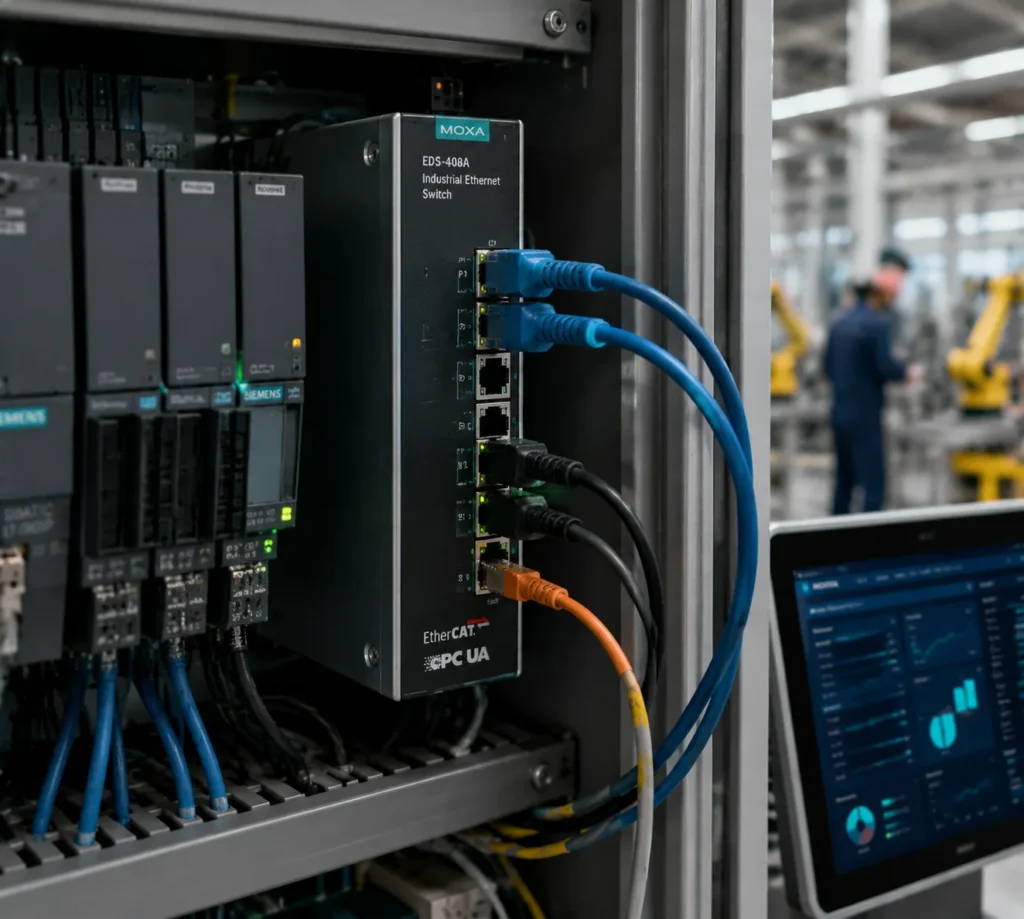
| OPC UA | Secure industrial interoperability |
| MQTT | IIoT and cloud communication |
| EtherCAT | Real-time motion control |
| PROFINET | Industrial Ethernet |
| EtherNet/IP | Factory network integration |
| CANBus | Embedded industrial devices |
According to Wikipedia OPC Unified Architecture, OPC UA is an IEC62541 standard designed for cross-platform industrial communication between sensors, PLCs, edge devices, and cloud systems.
In real industrial deployments, protocol compatibility often becomes the deciding factor.
For example, one warehouse automation customer needed:
- MQTT cloud synchronization
- OPC UA integration
- Multiple Ethernet ports
- Real-time AGV monitoring
Their previous HMI system could not support all required protocols simultaneously. After deploying industrial panel PCs, the customer achieved stable interoperability between MES, PLCs, and warehouse robots.
This is one reason why industrial panel PCs are becoming essential in Industry 4.0 environments.
How to Choose Between HMI and Industrial Panel PC
Choosing the right industrial computing solution depends on your factory workload, software requirements, and future scalability.
Choose an HMI If:
- You only need simple PLC control
- Your system does not require Windows/Linux software
- Budget is extremely limited
- Data collection requirements are minimal
- No future AI or MES integration is planned
Choose an Industrial Panel PC If:
- You require SCADA or MES integration
- Your factory uses edge computing
- AI vision inspection is required
- Remote monitoring is necessary
- You need flexible software deployment
- Long-term scalability is important
Step-by-Step Selection Process
Step 1 — Define Your Software Requirements
Determine whether your application requires:
- SCADA
- MES
- Database systems
- AI software
- Cloud connectivity
Step 2 — Check Communication Protocols
Verify compatibility with:
- PLC brands
- OPC UA
- MQTT
- EtherCAT
- PROFINET
Step 3 — Evaluate Environmental Conditions
Industrial environments may require:
- Fansız soğutma
- IP65 protection
- Geniş sıcaklık desteği
- Anti-vibration design
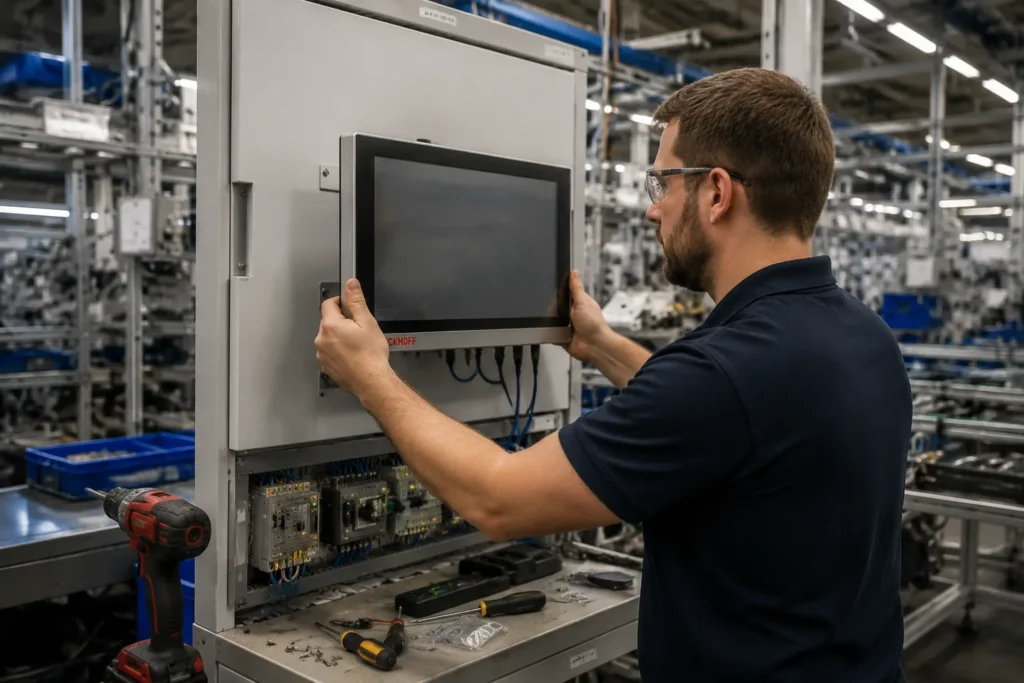
Step 4 — Plan for Future Expansion
Many factories underestimate future software requirements. In our experience, customers who initially choose low-cost HMIs often need costly upgrades later when deploying MES or AI systems.
Planning ahead can significantly reduce long-term replacement costs.
Real Industrial Use Cases
CNC Machine Control
Modern CNC systems increasingly require:
- AI defect inspection
- Real-time production analytics
- Remote maintenance
Industrial panel PCs provide significantly better performance for these workloads compared with traditional HMIs.
Smart Warehouse Systems
Warehouse automation systems often require:
- AGV communication
- Cloud synchronization
- Real-time dashboards
Industrial panel PCs provide stronger networking capability and flexible software deployment.
Food Processing Automation
Food factories often need IP-rated fanless systems because dust and moisture can damage traditional commercial devices.
We deployed stainless-steel industrial panel PCs in one beverage production line where standard HMI systems frequently failed due to humidity and washdown conditions.
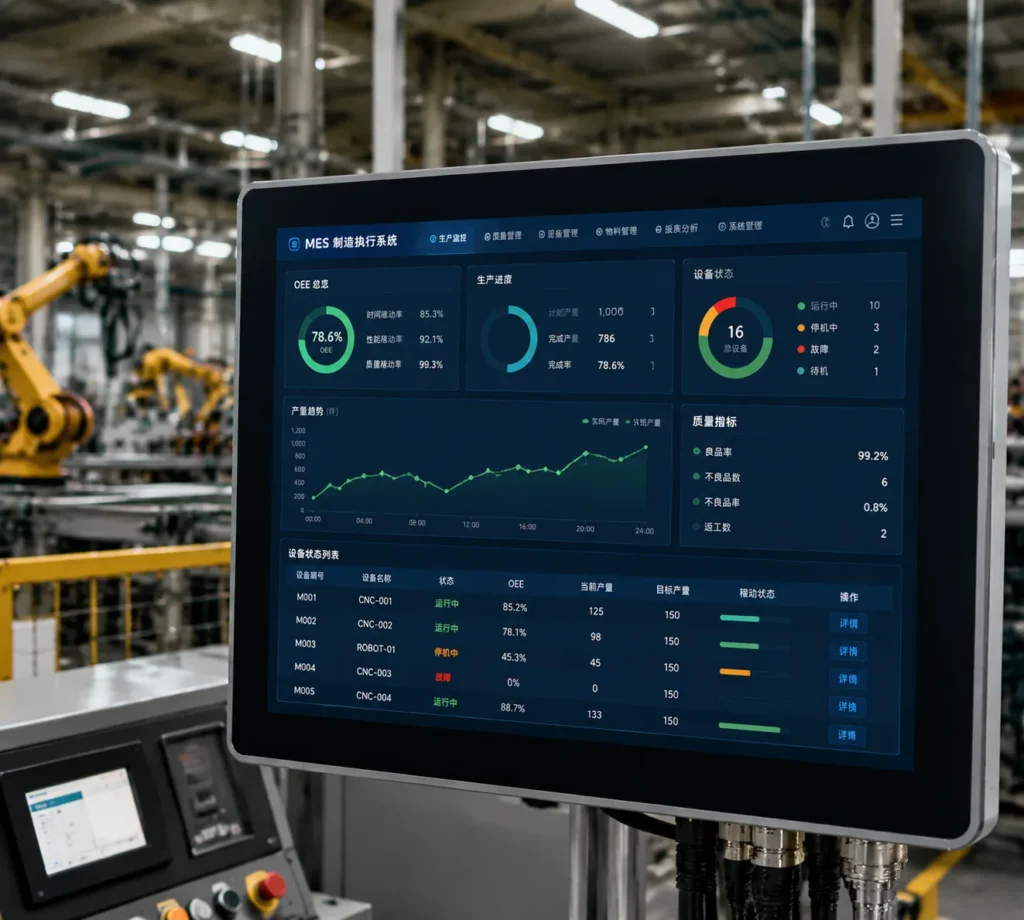
MES Data Collection Terminals
MES terminals require:
- Database communication
- Historical storage
- ERP synchronization
Traditional HMIs struggle with these workloads, while industrial panel PCs can run full MES software environments efficiently.
SSS
Can a panel PC replace an HMI?
Yes. In many modern factories, industrial panel PCs are replacing traditional HMIs because they support SCADA, MES, edge computing, AI applications, and advanced industrial communication protocols.
What is the difference between HMI and SCADA?
An HMI is usually a local operator interface connected to a machine or PLC, while SCADA is a larger supervisory system used for centralized monitoring and control across multiple industrial systems.
Is Windows or Linux better for industrial panel PCs?
Windows is commonly used for SCADA and MES software compatibility, while Linux is preferred for lightweight edge computing and customized embedded deployments.
Why are fanless industrial panel PCs important?
Fanless industrial panel PCs reduce dust intake and improve long-term reliability in harsh industrial environments such as factories, warehouses, and outdoor automation systems.
What protocols should industrial panel PCs support?
Modern industrial panel PCs should ideally support OPC UA, MQTT, Modbus, EtherCAT, PROFINET, and EtherNet/IP for Industry 4.0 compatibility.
Are industrial panel PCs suitable for edge AI?
Yes. Industrial panel PCs with Intel x86 or GPU acceleration are increasingly used for edge AI applications such as machine vision inspection, predictive maintenance, and real-time analytics.
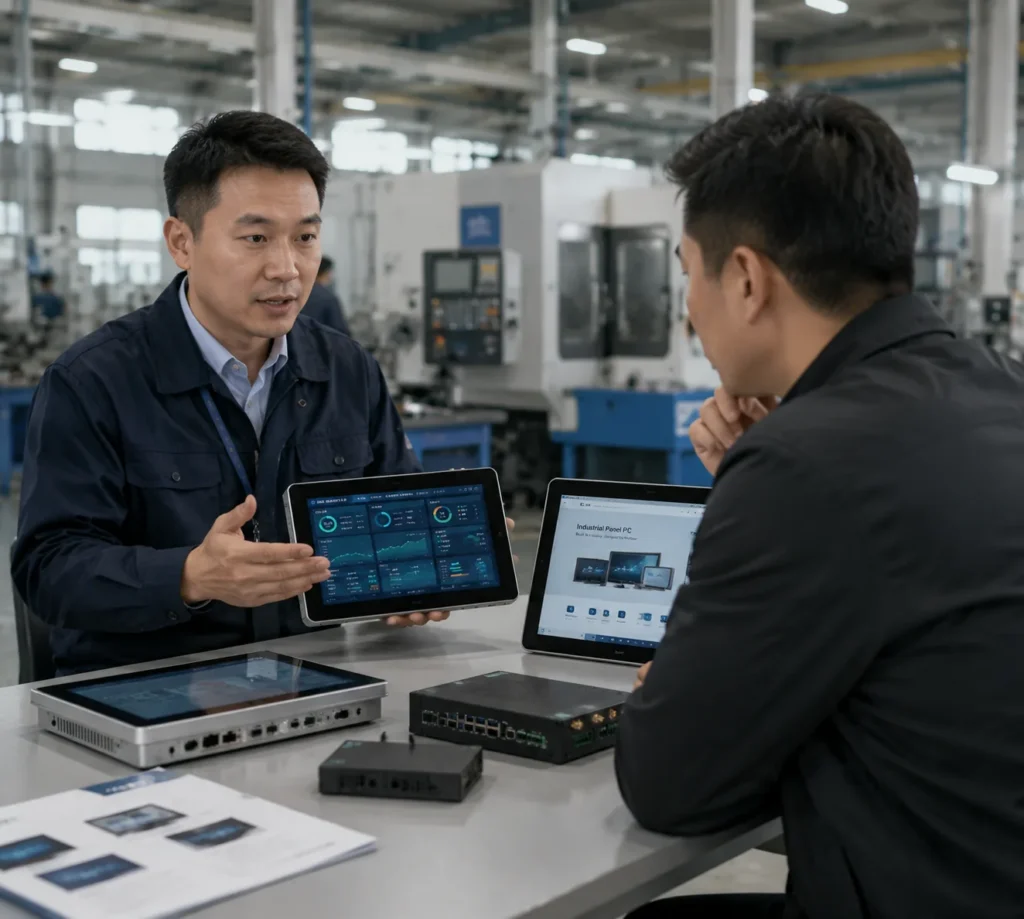
Ready to Upgrade Your Industrial Automation System?
Choosing between an HMI and an industrial panel PC is no longer just a hardware decision. Modern factories increasingly require scalable computing platforms that support SCADA, MES, edge AI, remote monitoring, and Industry 4.0 integration.
If your production environment is evolving toward smarter automation, an industrial panel PC can provide:
- Better long-term scalability
- More flexible software deployment
- Advanced industrial communication support
- Improved reliability in harsh environments
- Easier future upgrades for AI and edge computing
At YLW Industrial PC Solutions, we help manufacturers, system integrators, and automation engineers select the right industrial computing platform for real factory deployments.
Whether you need:
- Fanless industrial panel PCs
- IP65 waterproof touch panel PCs
- Industrial computers for MES or SCADA
- Edge AI industrial computing solutions
- Custom OEM/ODM industrial hardware
our engineering team can help you evaluate the best solution based on your application, environmental conditions, software requirements, and long-term maintenance goals.
Explore Related Solutions
Request a Quote or Technical Consultation
If you are planning a new automation project or upgrading existing HMI systems, contact our team for:
- Product recommendations
- Industrial hardware customization
- Project evaluation
- OEM/ODM support
- Technical deployment advice